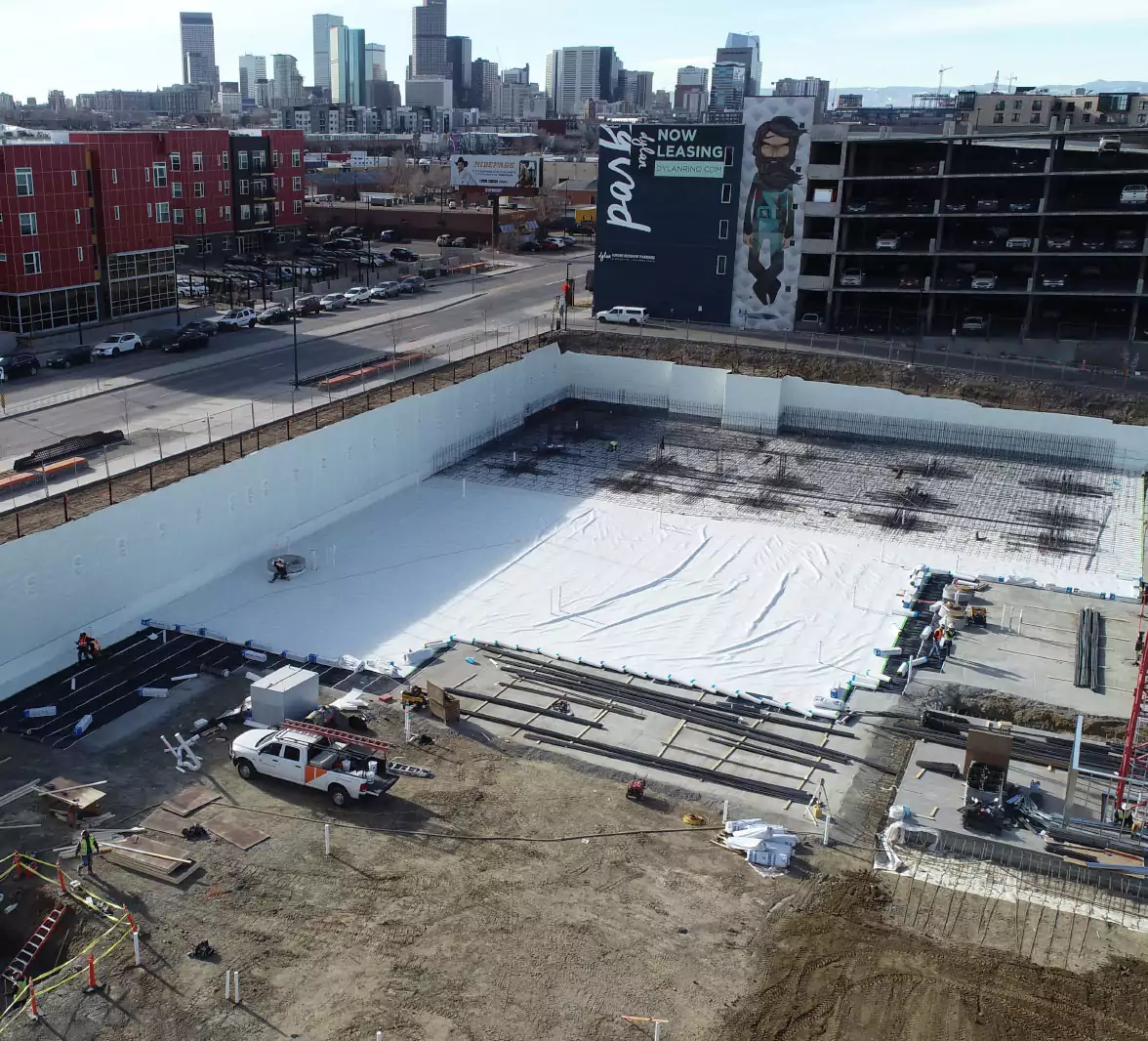
Commercial waterproofing protects buildings from leaks, moisture intrusion, foundation damage, mold risk, and long-term structural issues. Douglass Colony Group provides commercial waterproofing in Denver, Colorado, and the Rocky Mountain region for roofs, terraces, plaza decks, green roofs, foundations, and below-grade building systems.
With decades of commercial waterproofing experience across Denver, Colorado Springs, and the Rocky Mountain region, Douglass Colony Group specializes in protecting complex buildings from water damage at every level. Our team supports multifamily, hospitality, municipal, institutional, mixed-use, and commercial properties with waterproofing systems designed for long-term performance.
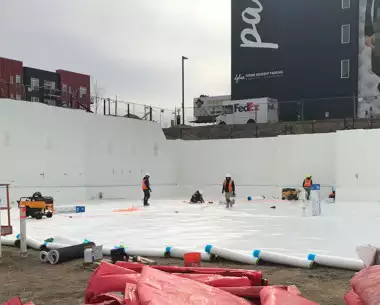
Douglass Colony Group provides professional all-weather roof, garden, terrace, plaza, foundation, and below-grade waterproofing services to help safeguard your building against leaks and water damage.The lack of proper waterproofing measures can lead to a variety of problems including leaks, foundation issues, health issues related to mold, and spoiled furniture, carpets, and belongings.
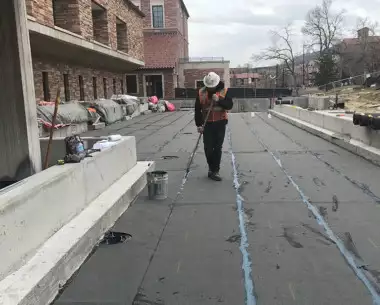
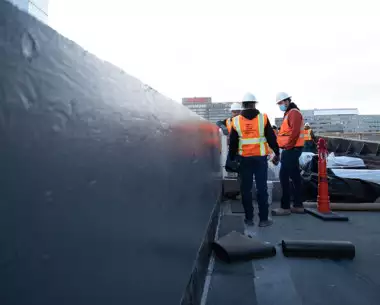
Douglass Colony provides waterproofing services for both flat and steep roofs to prevent moisture from reducing the structural integrity of your building and are also ready at any time to provide leak or water damage repairs.
Using industry-leading partners providing the best materials available, our team ensures every commercial waterproofing project is completed to the highest quality standards for complete customer satisfaction.