
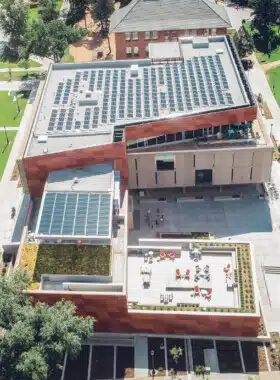
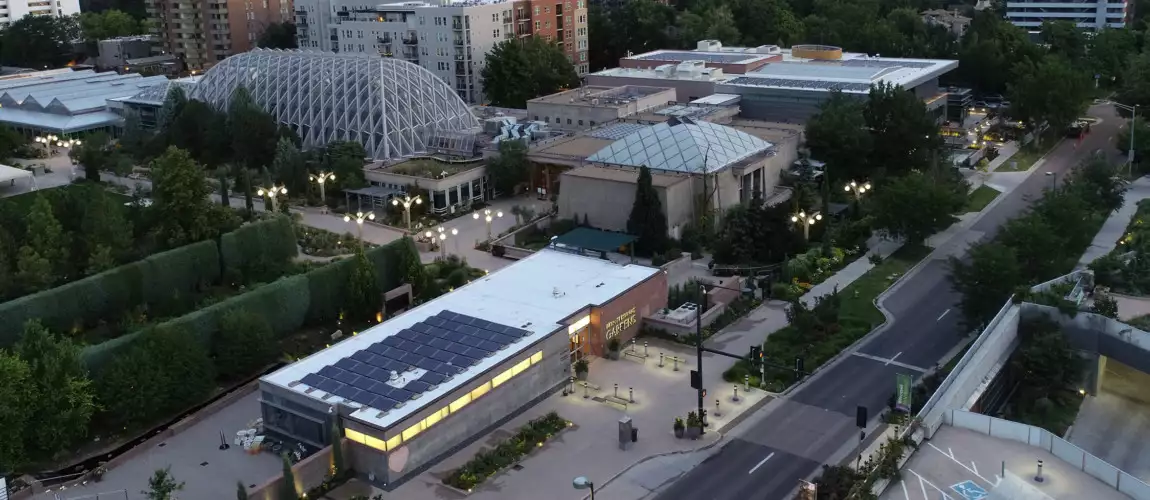
Roof Mounted PV
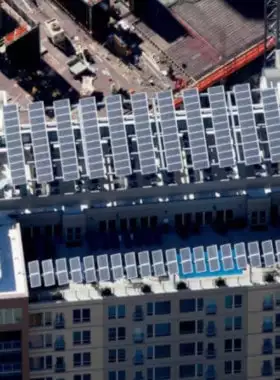
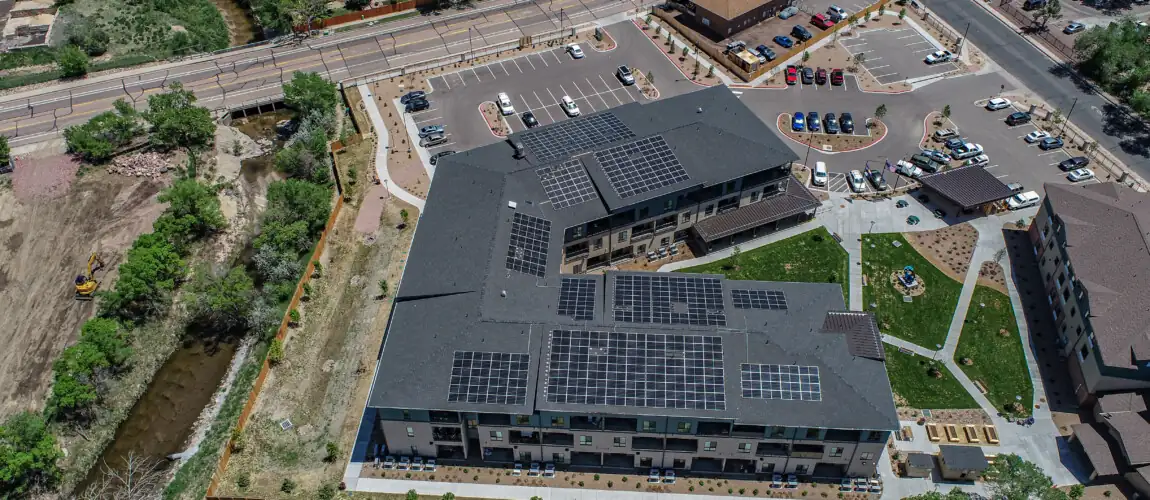
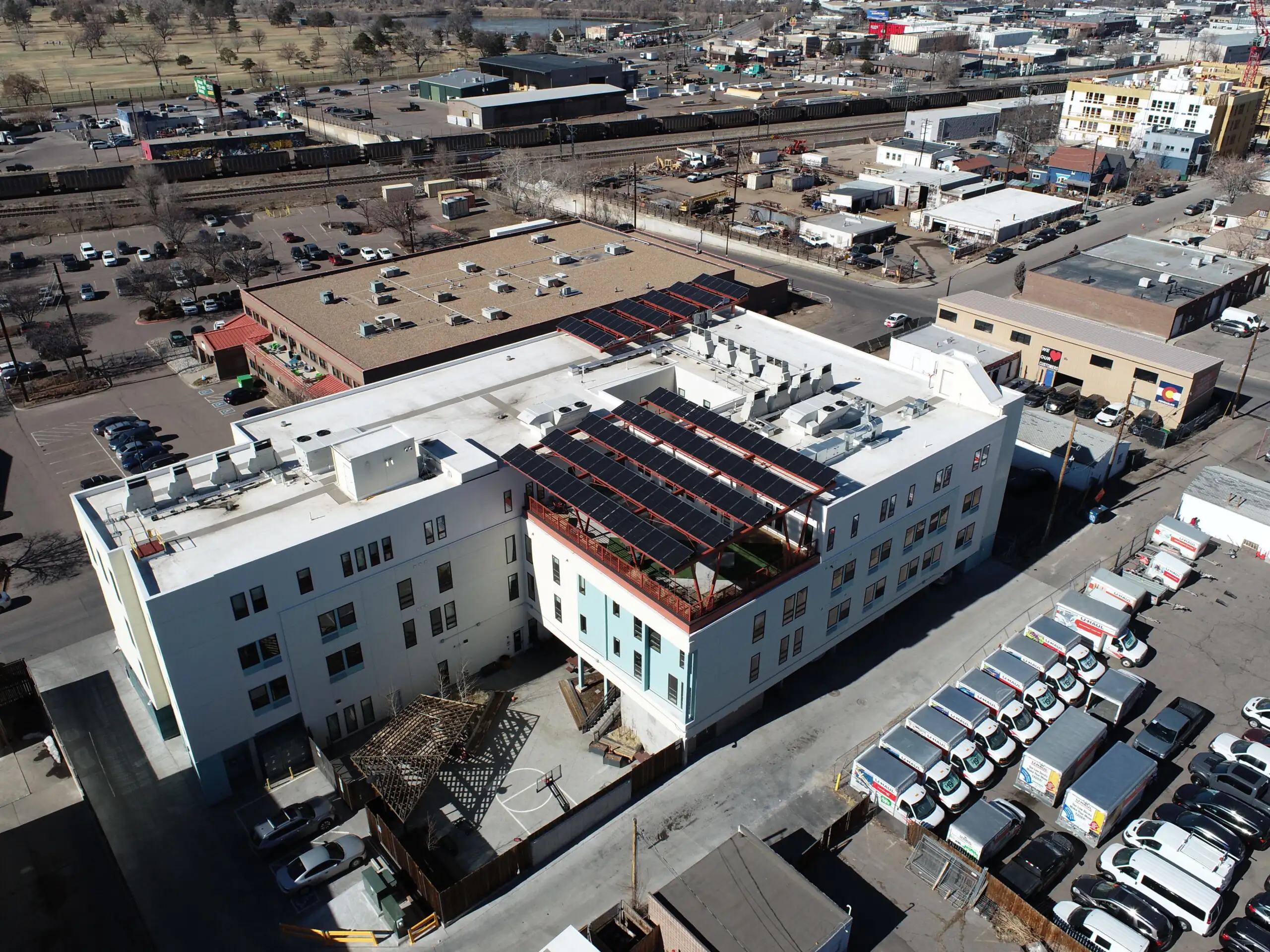
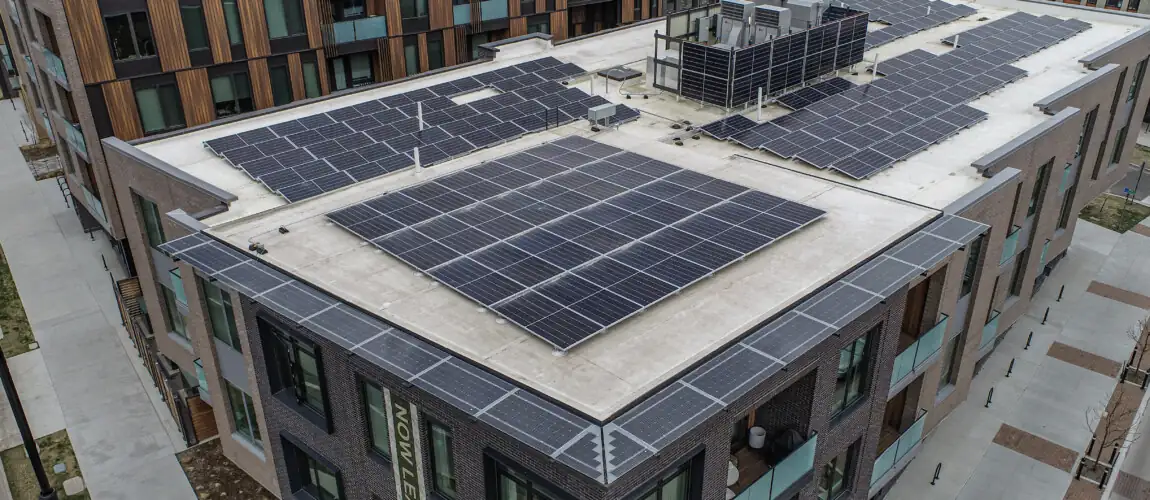
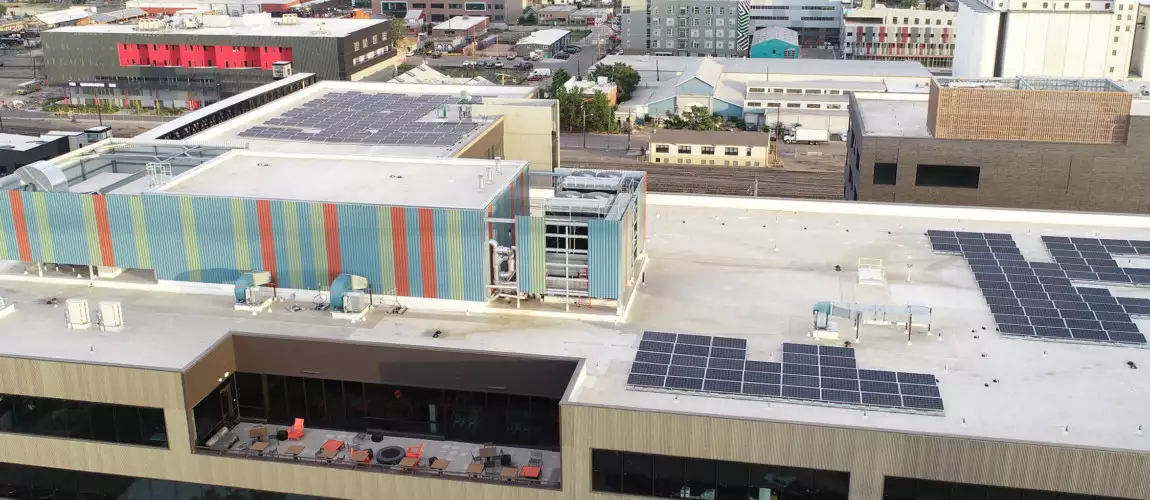
Roof-mounted PV systems place solar panels directly on the building’s roof using either ballasted or attached arrays. This is often the best fit for commercial buildings with large, flat, or low-slope roofs and strong sun exposure.
A 30% Investment Tax Credit (ITC) is available to applicable properties through 2032. In 2025, this tax incentive can be combined with an additional 10% Domestic Content Bonus, among other savings add-ons. Reach out for more information regarding this incentive and how it can benefit you.
Commercial solar installation helps building owners reduce energy costs, improve long-term property value, and support sustainability goals. Douglass Colony Group provides commercial solar panels, solar audits, design, permitting, turnkey installation, and solar maintenance for properties throughout Denver, Colorado, and the Rocky Mountain region.
For commercial properties, solar is more than an environmental upgrade. It is a building investment that can support energy savings, tax planning, tenant expectations, and long-term operating performance.
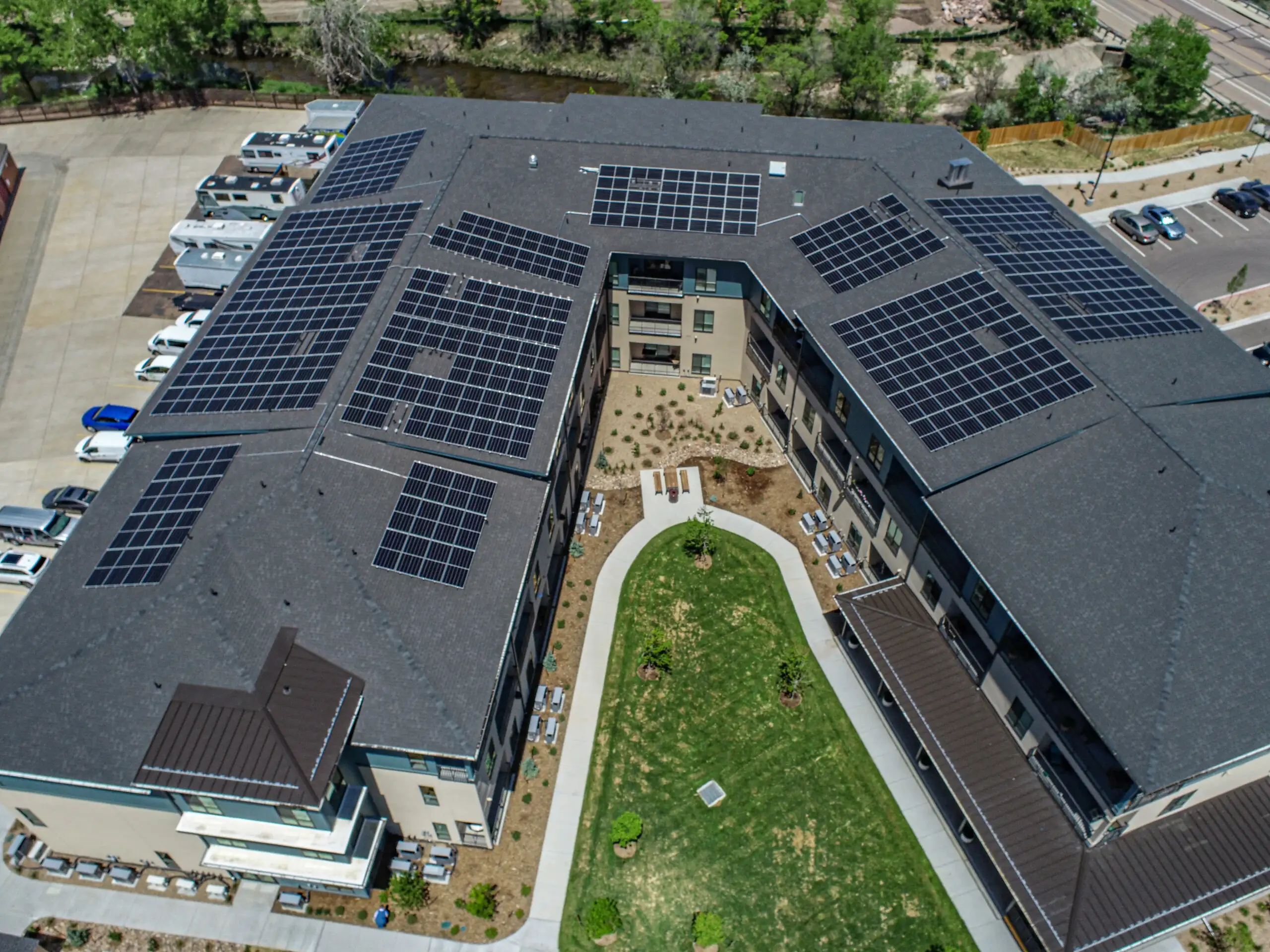
Choosing solar is a low-risk way to raise ROI. By investing in commercial solar panels, your property immediately increases in value. Beyond the immediate gain, you will also see reduced operating expenses over time, counteracting the upfront installation cost.
Commercial solar payback timelines vary based on system size, utility rates, energy use, incentives, and financing structure, but many commercial projects can see payback in roughly 5 to 10 years. A solar audit and financial model can help estimate your specific return before installation begins.
As experts in commercial solar depreciation (a part of the system’s cost can be deducted from taxable income), we’ll help you understand how solar tax credits, renewable energy credits, utility incentives, and depreciation may affect your investment. MACRS, or the Modified Accelerated Cost Recovery System, allows many commercial solar owners to recover part of the system cost through accelerated depreciation.
Bonus depreciation may allow businesses to deduct a larger portion of eligible project costs earlier in the system’s life. In simple terms, tax credits can reduce tax liability, while depreciation can help reduce taxable income. Together, they can improve the financial case for commercial solar panels in Colorado.
Not only is installing solar panels good for your wallet, but it also sets your building apart. Investing in sustainability shows your commitment to maintaining and raising the quality of your building, which, in turn, also raises the quality of your surroundings, reflecting your dedication to the environment as well as your community.
For multifamily, office, hospitality, municipal, and institutional properties, solar can also support tenant attraction, community impact, ESG goals, and green building expectations.
Denver is widely known for approximately 300 days of sunshine each year, giving commercial solar panels strong year-round potential. Even in winter, solar panels can continue generating value when they are properly designed for the building, roof, and regional conditions.
That makes solar especially compelling for commercial properties in Denver, Colorado, and the Rocky Mountain region, where strong sun exposure can support long-term energy production.
Douglass Colony offers complete solar services for commercial buildings in the Denver and greater Colorado area.
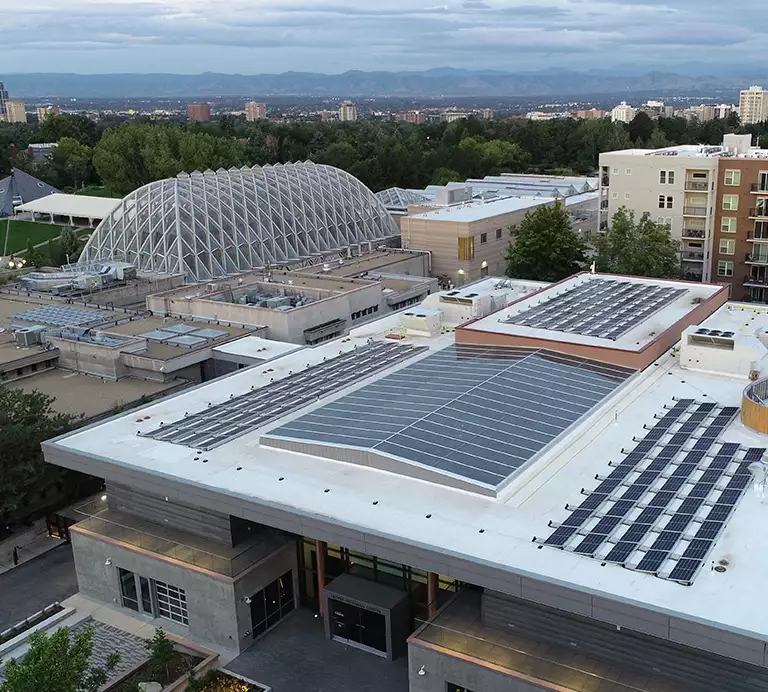
Our approach to every solar project begins with a solar audit through an on-site survey of the building and location or off-site modeling. Our survey teams measure the patterns of sunlit and shaded areas, review the available roof or site area, and analyze the building’s current energy consumption.
A commercial building solar audit in Denver or anywhere in Colorado can often begin remotely, using energy data, roof plans, utility bills, and satellite modeling. For more complex properties, our team may also complete an on-site assessment to evaluate roof conditions, electrical infrastructure, access, shading, and installation considerations.
Most solar audit timelines depend on the size and complexity of the building, but clients can typically expect the process to include site review, energy modeling, financial modeling, and a recommended system approach. Deliverables may include a draft layout, energy production estimate, financial projection, incentive review, and next-step recommendations for design, permitting, procurement, and installation. With expert workmanship and unmatched dedication to quality, technology, and our customers, our solar energy division provides comprehensive support and service, including green roof building and waterproofing.
Next, we assess the best approach to integrating the solar energy system with the existing electrical infrastructure and estimate how much solar-generated electricity your building can generate.
Roof-mounted PV systems place solar panels directly on the building’s roof using either ballasted or attached arrays. This is often the best fit for commercial buildings with large, flat, or low-slope roofs and strong sun exposure.
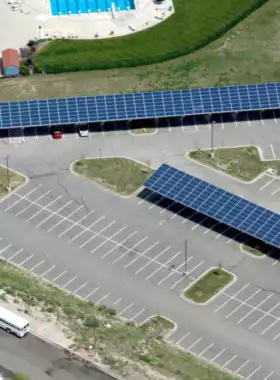
Carport and canopy PV systems turn parking areas, walkways, or covered exterior spaces into solar-producing assets. They can provide renewable energy while also offering shade and weather protection for vehicles, visitors, employees, or tenants.
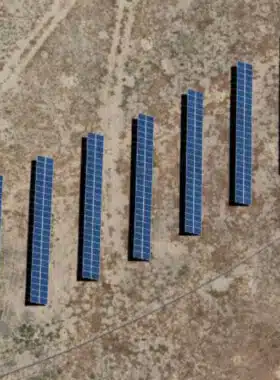
Ground mount PV systems are installed on open land instead of the roof. They are a strong option for commercial properties, campuses, municipal sites, and larger facilities with available land and high energy demand.
Custom PV awnings integrate solar generation into architectural shade structures. They are useful when a project needs solar production, design flexibility, and a creative way to use building edges, entrances, patios, or pedestrian areas.
As an incentive for installing solar panels, the Federal Government offers clean energy tax credits for qualifying commercial solar projects. The available credit amount depends on the project, eligibility requirements, labor standards, domestic content, location, and current federal guidance.
Douglass Colony can help building owners understand how solar tax credits may factor into the planning process, while working alongside the owner’s tax advisor to support smart decision-making.
Your commercial solar system not only provides energy savings, but many utilities also offer additional production incentives and Renewable Energy Credits. These programs vary by utility, project size, location, and timing.
For commercial property owners in Colorado, reviewing available incentives early can help clarify the project’s financial picture. Incentives, RECs, and avoided utility costs can all affect long-term commercial solar ROI.
Solar PV may qualify for accelerated depreciation under the Federal Modified Accelerated Cost-Recovery System, commonly known as MACRS. This allows many businesses to recover a portion of eligible solar project costs over a shorter period.
Bonus depreciation may also allow eligible businesses to deduct a larger share of qualifying costs earlier. Because depreciation rules can be complex, Douglass Colony can help provide project information while your tax advisor determines how the rules apply to your business.
Douglass Colony’s solar experts can help you with every aspect of any project. Below is an overview of the solar services we provide.
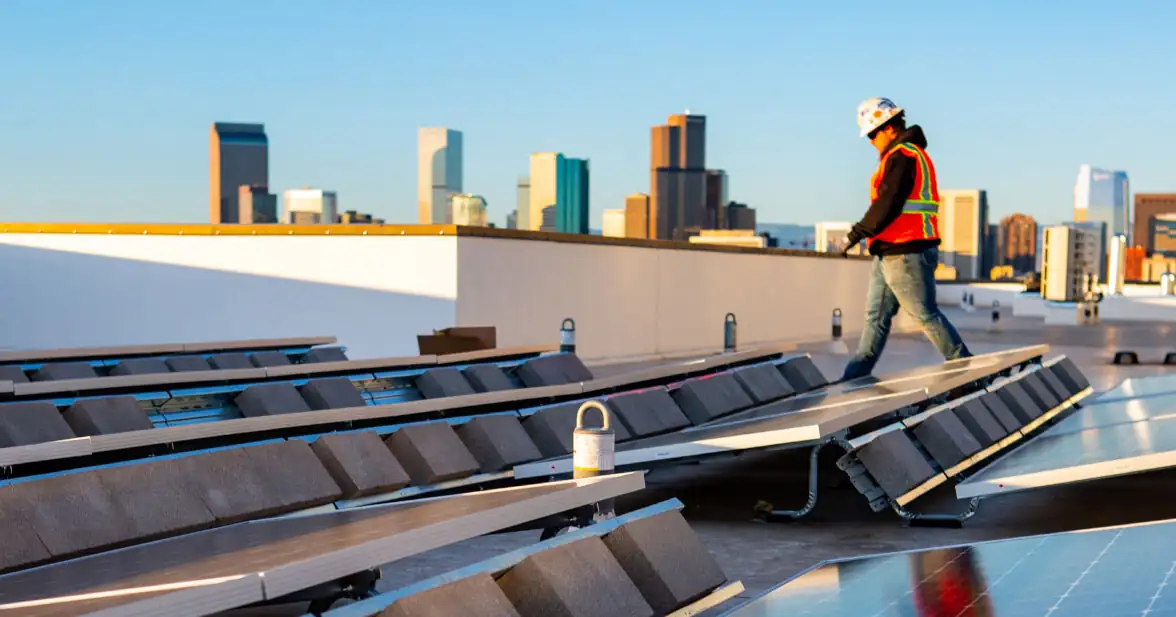
Deciding between a Green roof and a Solar roof? Why not both? Douglass Colony’s in-house roofing and solar experts are here to help you decide what’s best for your building. Denver’s Green Roof Initiative can be complex which is why we’re offering a free consultation to explore the most beneficial options for your project. Green and Solar construction mean less energy consumption, lower maintenance costs, and higher occupant satisfaction. Plus, it can result in tax credits for your commercial enterprise.
As a green building and roof expert, Douglass Colony has embraced its corporate and green building responsibilities starting with our very own office, which is LEED Silver certified. Proud to be on the forefront of green building in Denver and Colorado, Douglass Colony has numerous experienced LEED professionals on staff to assist you with your Colorado Green Building and Denver Green Roof Initiative projects. As one of the most experienced companies providing solar panels in Denver and the Rocky Mountain region, our team is ready to provide you with a wide range of solar services, from planning to installation to service and repair.
Yes, solar panels can often be installed on an existing commercial roof, but the roof should be evaluated first. A solar audit can help determine whether the roof has enough remaining service life, structural capacity, sun exposure, and access for installation and maintenance.
Yes. Douglass Colony provides solar permitting services as part of its commercial solar process. The team can also support utility applications, design and engineering, procurement, installation, monitoring, maintenance, and service.
Roof-mounted solar is installed on the building’s roof and is often ideal for commercial properties with large, open roof areas. Ground-mount solar is installed on open land and can be a better fit for campuses, municipal properties, industrial sites, or facilities with limited roof space.
Commercial solar installation timelines vary based on system size, permitting, utility approvals, procurement, roof conditions, and project complexity. Smaller projects may move faster, while larger or more complex commercial systems may require a longer design, approval, and construction process.
A solar audit evaluates whether a commercial building is a good fit for solar. It may include roof or site review, shade analysis, energy usage review, electrical infrastructure review, system sizing, energy modeling, and financial projections.
Denver is widely known for approximately 300 days of sunshine each year. For commercial building owners, that strong sun exposure is one reason solar panels can be a valuable investment in Denver, Colorado, and the Rocky Mountain region.
The Domestic Content Bonus is an additional federal incentive for qualifying clean energy projects that use certain U.S.-produced steel, iron, and manufactured products. For commercial solar projects, this bonus may increase the available investment tax credit when the project meets specific requirements.
Commercial solar depreciation allows eligible businesses to recover part of the cost of a solar energy system over time through tax deductions. MACRS is the federal depreciation system commonly used for commercial solar, and bonus depreciation may allow a larger deduction earlier in the system’s life.
The solar investment tax credit is a federal incentive that can reduce the tax liability associated with a qualifying commercial solar project. Under current clean energy credit rules, the base credit may increase when projects meet certain labor, domestic content, or location-based requirements.
Colorado businesses may be able to use federal solar incentives, utility incentives, renewable energy credits, and depreciation benefits depending on the project. Federal incentives may include the Clean Electricity Investment Credit, possible Domestic Content Bonus opportunities, and MACRS depreciation. Eligibility depends on current tax rules, project details, and ownership structure, so owners should consult a tax advisor early.
Commercial solar installation costs in Colorado vary based on system size, roof or site conditions, electrical infrastructure, permitting, equipment, incentives, and installation complexity. A commercial solar audit can help estimate system cost, energy production, payback timeline, and long-term ROI for your specific property.
Throughout the duration of the project your team was extremely flexible and worked hard to mitigate impact on city business… All these efforts resulted in strong support from the community, and elected officials… The solar system is performing better than projected. We congratulate you on this achievement.


The 30% commercial solar ITC still exists in 2026—but the rules have changed. See if your building qualifies under Section 48E and the deadlines that apply.

Most commercial roofs in Colorado last 15–40+ years, depending on the system, climate, and upkeep. See lifespan by roof type and what shortens it.
As huge Broncos fans ourselves, we’re proud to have played a role in bringing this incredible facility to life for Broncos Country. Douglass Colony Group installed nearly 40,000 square feet of roofing across multiple roof levels, including advanced waterproofing and state-of-the-art roofing systems designed for long-term performance and durability. Our scope also included the facility’s signature architectural metal features and one of the most complex standing seam roof systems we’ve ever constructed. It was an honor to help build a training facility worthy of the athletes who will prepare, compete, and chase championships within its walls. Go Broncos!